🔊
Historic Attacks
Review two earlier attacks on Our House. Explore with an open mind. Look for common traits. Understand how leaders encourage people to commit violent acts.
The War of 1812: Numerous factors led to the British–American War of 1812.
A major cause arose when the newly formed American government agreed to expand its domain
by attacking Canada. The United Kingdom came to Canada’s aid. Two years into the war,
British forces attacked several cities to quash dissent. They burned the Capitol and
other public buildings in Washington, D.C.
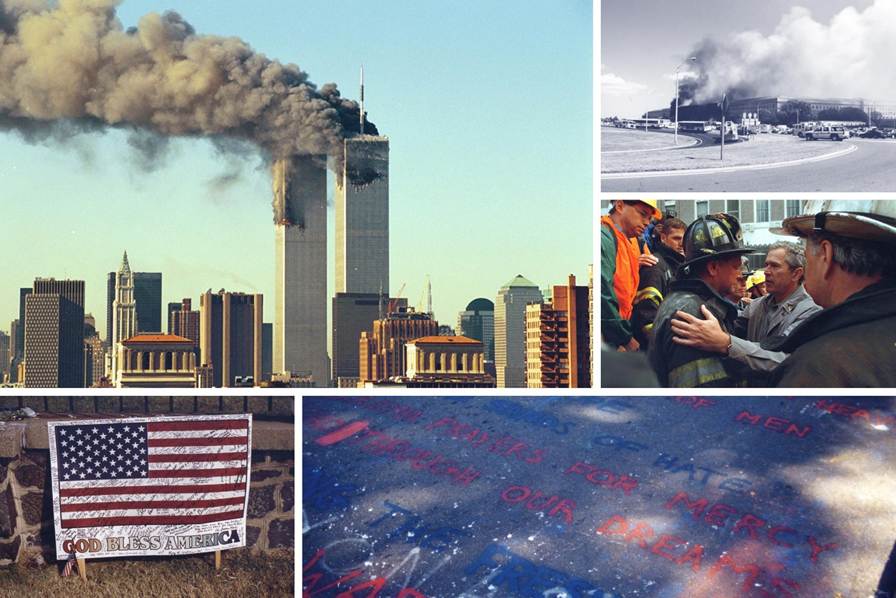
Al Qaeda’s 9/11 Attack in 2001: Osama bin Laden organized an attack on the United
States using hijacked commercial planes. Each target was selected to make a statement.
Two planes were flown into the World Trade Center Twin Towers in New York. A third plane
crashed into the Pentagon. A fourth plane was forced down by passengers before it could
reach its intended target — the Capitol.
Your understanding can help us avoid electing bad leaders. You can help prevent these kind of conflicts in the future.
🔊
The War of 1812
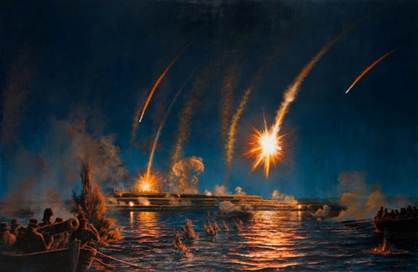 Perilous Night by Peter Rindlisbacher. The painting captured the attack that led to Francis Scott Key writing The Star Spangled Banner.
The War of 1812 was fought by the
United States
and its allies against the
United Kingdom and its allies in
North America.
It began when the United States
declared war on Britain in June 1812. The war lasted approximately 2½ years.
Recommended Videos
Origins and Motivations
Many factors led to the
US declaration of war on Great Britain
that began the War of 1812. Leading causes:
- US desire to expand and annex Canada.
- US expansion into Native American lands in the Northwest Territory.
- Upholding national honor after British insults such as the Chesapeake affair.
- British restrictions on American trade.
- Impressment of American sailors into the Royal Navy.
- Money and power — enough leaders wanted quick wealth and stature, and they thought could be obtained through confict more easily than through peace.
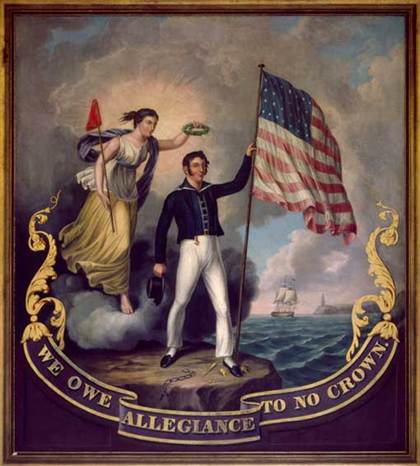 We Owe Allegiance to No Crown by John A. Woodside. The painting suggests the war was a fight for independence — but America’s attack on Canada lit the fuse.
The Lead Up
In the early 1800s, the American government settled into its role. The founding fathers had retired or died, and lessons of hardship faded.
New leaders convinced themselves the nation needed more land and resources
for their ambitions.
Political parties split over the war:
Democratic-Republicans favored it,
while the Federalists opposed.
Meanwhile, the UK was fighting France and Spain — far more formidable opponents — and had little interest in another war.
American leaders believed 1812 was the moment to strike.
UK ministers actually offered concessions to avoid war — but news traveled slowly. The conflict had already begun.
Fighting
Early American efforts failed. Attempts to take Canada collapsed. The liberties gained in the Revolution were at risk.
In Europe, the Battle of Vitoria turned the tide. Napoleon surrendered in 1814, enabling Britain to reinforce its American campaign.
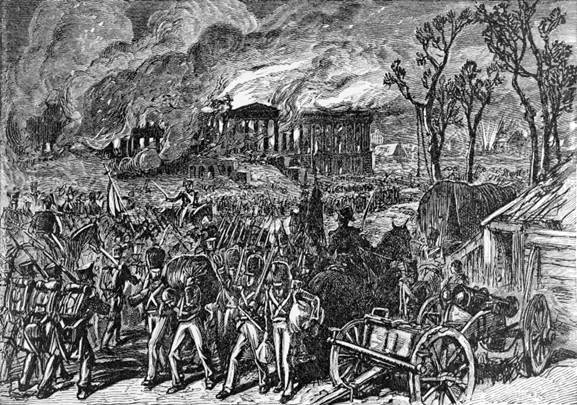
British naval superiority and reinforcements shifted the balance. British leaders in London, and military generals and admirals in North America debated how far to push the war. They agreed to attack the US capital- but only public institutions and the buildings that housed them. Our House was top of the list.
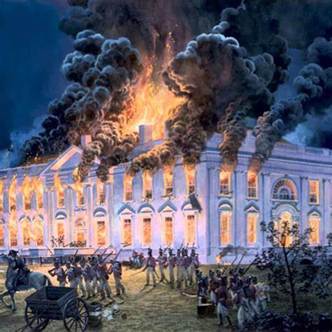
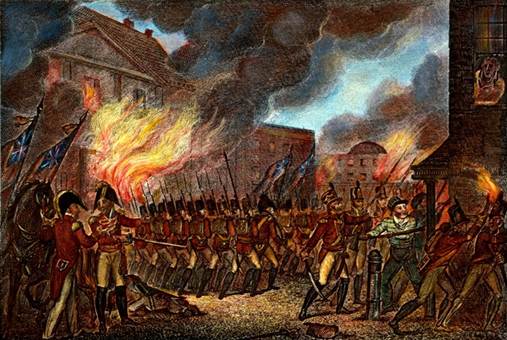 Historic Engraving of the Burning of Washington, August 1814, artist unknown.
Burning Washington
British forces under Major-General
Robert Ross
marched on Washington, D.C., burning the
Presidential Mansion,
Capitol,
and Navy Yard.
A tornado and hurricane helped extinguish the fire. Ironically, homes spared by the British as they practiced "limited warfare" were mercilessly ravaged by the tornado.
The Capitol’s fire-resistant exterior survived. Some saw this as a miracle; others saw it as a silver lining on a bad decision — starting the war.
The war continued another year. Plunder occurred on both sides. Few items taken were ever returned.
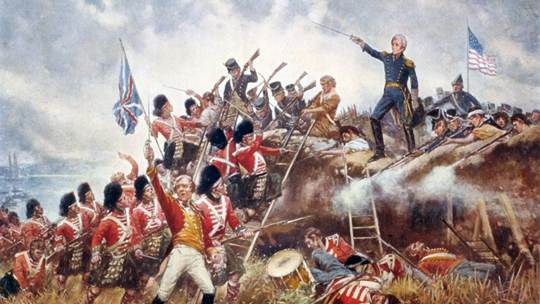 The Battle of New Orleans by Jean Hyacinthe de Laclotte — an idealized moment of bravery, typical of artistic liberty.
War Expands- New Orleans
The war extended across sea and land. British naval blockades strangled trade and allowed landings anywhere.
In the American south, the British attempted to take New Orleans and West Florida. The famous battle of New Orleans occurred after the peace treaty had been signed — but before news reached the field.
Economic pressure convinced leaders peace was preferable. The Treaty of Ghent,
signed December 1814 was ratified two months later in February 1815.
Aftermath
Washington remained the seat of government. Public buildings were rebuilt starting in 1815 under
Benjamin Henry Latrobe,
the original architect — a British citizen, symbolizing how quickly peace restored normalcy.
Some plundered items were eventually returned.
Key Lessons
- Most conflicts could be avoided if leaders shared a common vision of life’s purpose.
- American expansion led to broken treaties and repeated conflicts with Native Americans and Mexico.
- The pattern of Promises Broken repeated when rights were not extended to women, Native Americans, Black Americans, and minorities.
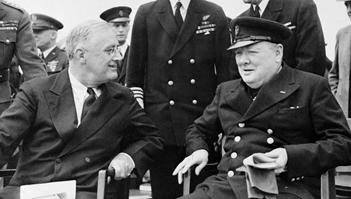 Collaboration between the UK and US proved strong through 2025. Wise leaders who honor international oaths and restrain personal ambitions and ego demonstrate humans can work together in peace and war.
- Starting a war because another nation is distracted is never wise.
- It is always the right time to do the right thing.
- War plunder should not be kept or displayed. After 200 years, items taken in the War of 1812 should be returned.
- Leaders driven by “manifest destiny” or self‑aggrandizement often encourage violence to achieve their aims.
- This war ended when leaders realized they could make more money and gain more power through peace rather than continue the war. Find examples of other wars that ended this way? Then ask- "Is it wise to start a war if the real motivation for most wars is their leaders desire to distract citizens and gain more personal wealth and power?
What Can You Do?
-
Visit Our House.
Take an inside tour!
Ask to see vestiges of the 1814 attack.
- Stay vigilant. Use your Free Speech.
- Small actions matter. Write your members of Congress. Tell them to make plunder a
War Crime. Encourage legislation to return War of 1812 plunder. The UK will reciprocate.

🔊
The 9/11 Attack (September 11, 2001)
(Under Development)